

The Clio and the Boy from Manchester
A training ship in the Menai Strait, and how a Manchester boy may have found his way to Hawaii
James William Wilkinson died in Honolulu in July 1909, a marine engineer, a Freemason and a member of the Marine Engineers’ Benevolent Association. He had worked the engines of the steamers between the Hawaiian islands and, at the end, the great steam pumping engine at Kalihi that supplied Honolulu with water. He was born in 1869 at 19 Lower Albion Street, Manchester, the son of an organ builder.
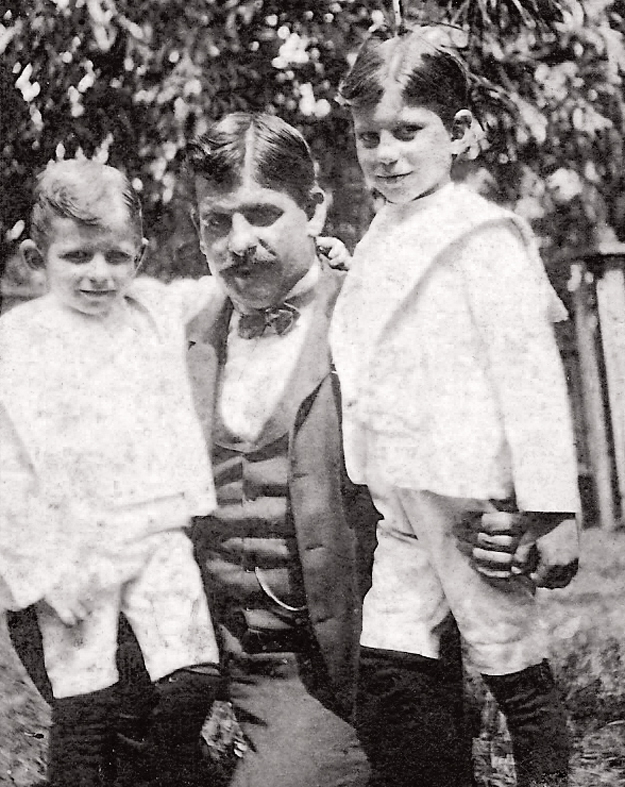
For a long time his family could not say how a boy from a Manchester back street came to be working in the Pacific before he was twenty. His mother died in 1875. In 1879 his father remarried at Chester, and the 1881 census finds the new family at 28 Lyon Street, Chester, with a baby son. James and his younger brother Joseph are not with them, and James cannot be found anywhere on land.
He can, very probably, be found on the water. On census night, 3 April 1881, the enumerator listed the boys aboard a ship moored off Bangor in the Menai Strait. Among them was:
WILKINSON J W, scholar, 11, training for the sea, born Manchester, Lancashire
The ship was the Industrial Training Ship Clio. This is her story, drawn largely from the only full history of her, Emrys Wyn Roberts’s The ‘Clio’ 1877–1920, together with what we know of James.
A warship that had already been to Hawaii
Long before she held a single schoolboy, the Clio was a Royal Navy fighting ship. She was a wooden corvette of 22 guns, launched at Sheerness Dockyard in August 1858, with sails and an auxiliary steam engine. She served on the Pacific Station, and later as flagship of the Australia Station.
She had a Hawaiian connection of her own. In 1865 she called at Honolulu to carry the widowed Queen Emma to Panama, the first stage of her voyage to England and a visit to Queen Victoria. While the Clio lay in Honolulu harbour, some of her midshipmen took the carved American eagle from the front of the United States Legation in the town as a prank. One of them was the young Charles Beresford, later a famous admiral. The captain made them carry it back and apologise in front of a crowd.
These details of the warship’s career come from naval histories (Wikipedia’s article on HMS Clio, 1858) and from Albert Pierce Taylor, Under Hawaiian Skies (1922), p.98, not from Mr Roberts’s book.
By 1876 she was worn out as a warship and was paid off.
Why a training ship?
Victorian Britain had two worries that a training ship promised to solve at once. Its cities were full of poor, neglected and homeless children. And its merchant fleet, then the largest in the world, and its navy always needed young seamen.
The Industrial Schools Acts of the 1850s and 1860s let magistrates send children to a certified “industrial school” if they were found begging, wandering, homeless, destitute, keeping bad company, or beyond their parents’ control. An industrial school was not a reformatory. A boy convicted of a crime went to a reformatory, and the Royal Navy would not take a reformatory boy (p.21). An industrial school ship gave such boys a home, a basic education and a trade, and that trade was the sea. By 1877 there were training ships on the Thames, the Mersey, the Tyne, the Clyde, at Cardiff, Bristol, Plymouth and elsewhere (pp.21–22).
The North Wales scheme began at a meeting in Wrexham in 1875. Its driving force was Captain W. M. Moger RN of Gresford, a Crimean War veteran who had already trained boys on a ship at Plymouth. The Duke of Westminster became President. The first plan was to moor an old line-of-battle ship in the Dee off Mostyn. But the gentry of Anglesey and Caernarfonshire made their money conditional on a mooring in the Menai Strait, and they won (pp.23–37).
The ship first chosen proved too costly to fit out. At the end of 1876 the Admiralty offered the Clio instead. On the Admiralty’s advice her engines and boilers were taken out at Chatham, to make room for the boys, and she was fitted out on the Thames. The fitting-out came to more than £7,000, all of it raised privately (pp.37–38, 75).
She was towed round from Sheerness in August 1877, losing her escort in a gale off Land’s End, and moored in Bangor Pool, between Garth Ferry and Glyn Garth, on the Anglesey side of the Strait. She opened on 20 August 1877 in pouring rain and was certified for 200 boys nine days later (pp.38–40). Her owners had a long name: the North Wales, City of Chester, and Border Counties Industrial School Training Ship Society. Their annual meetings were held at Chester Town Hall.
Who the boys were
The ship was advertised as being for the poor boys of North Wales and the border counties. In fact, as Mr Roberts shows, most of her boys came from the great industrial towns of England. At the end of 1879 there were 263 boys aboard. 92 of them came from London and 65 from Manchester, with smaller numbers from Salford, Nottingham, Blackburn, Birmingham and the Welsh counties (p.111). The Manchester School Board had agreed in 1877 to place 50 boys on the Clio, and in 1878 it voted £250 towards the ship (pp.40–41, 74).
The same report shows how many of the boys had lost a parent. Of those aboard, 25 had neither father nor mother, 57 had no mother, and 63 had no father (p.111). James, whose mother had died, was far from unusual.
Boys came between the ages of 11 and 15. Most were committed by magistrates under the Industrial Schools Acts. Others were truancy cases under the Education Acts, and a few were sponsored by subscribers. Each boy’s keep was 7s 6d a week, most of it paid by the Treasury and the rest by the authority that sent him (p.46). Many arrived small, underfed and, as one report put it of the Welsh boys in 1880, “very ignorant on admission” (p.116).
A day aboard
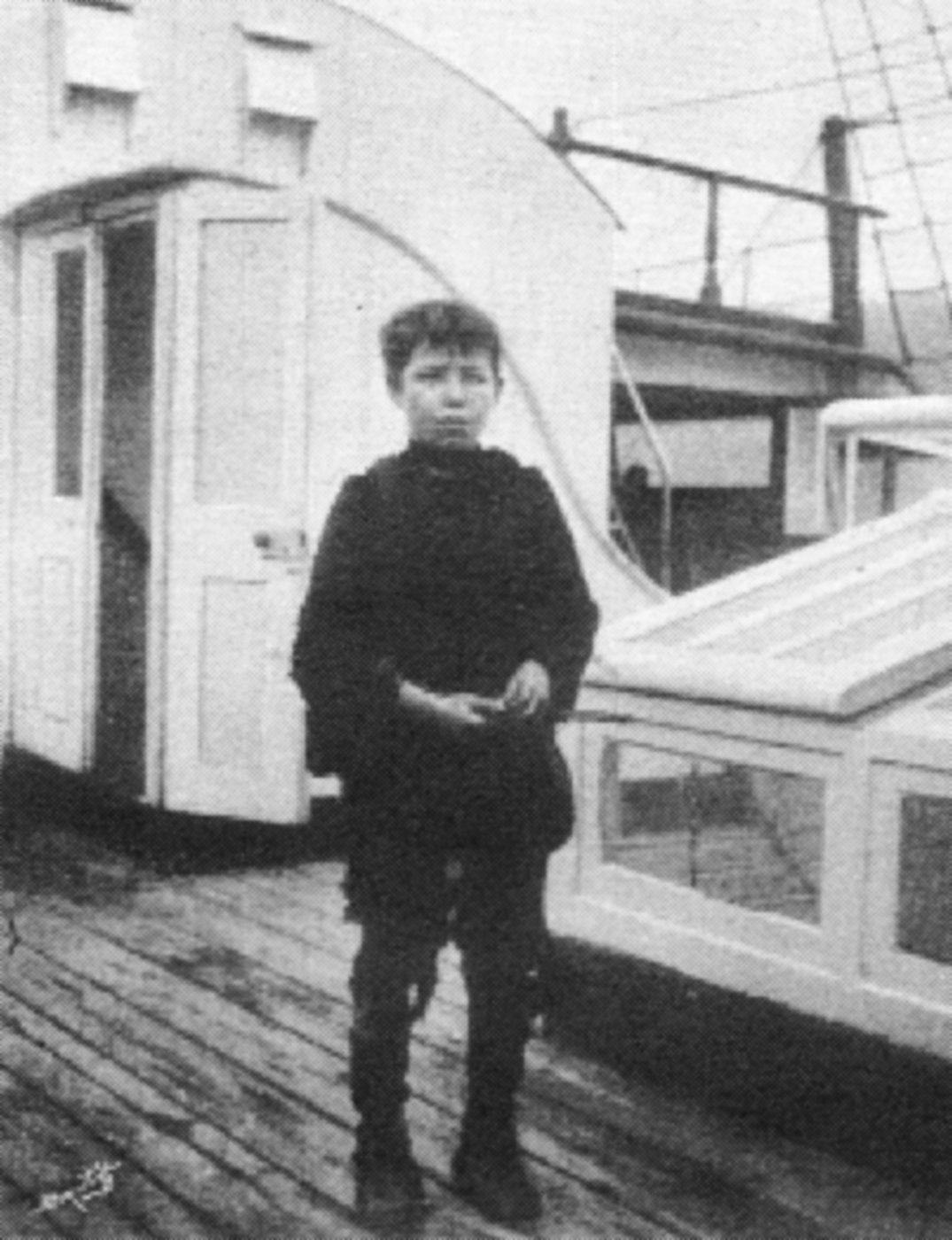
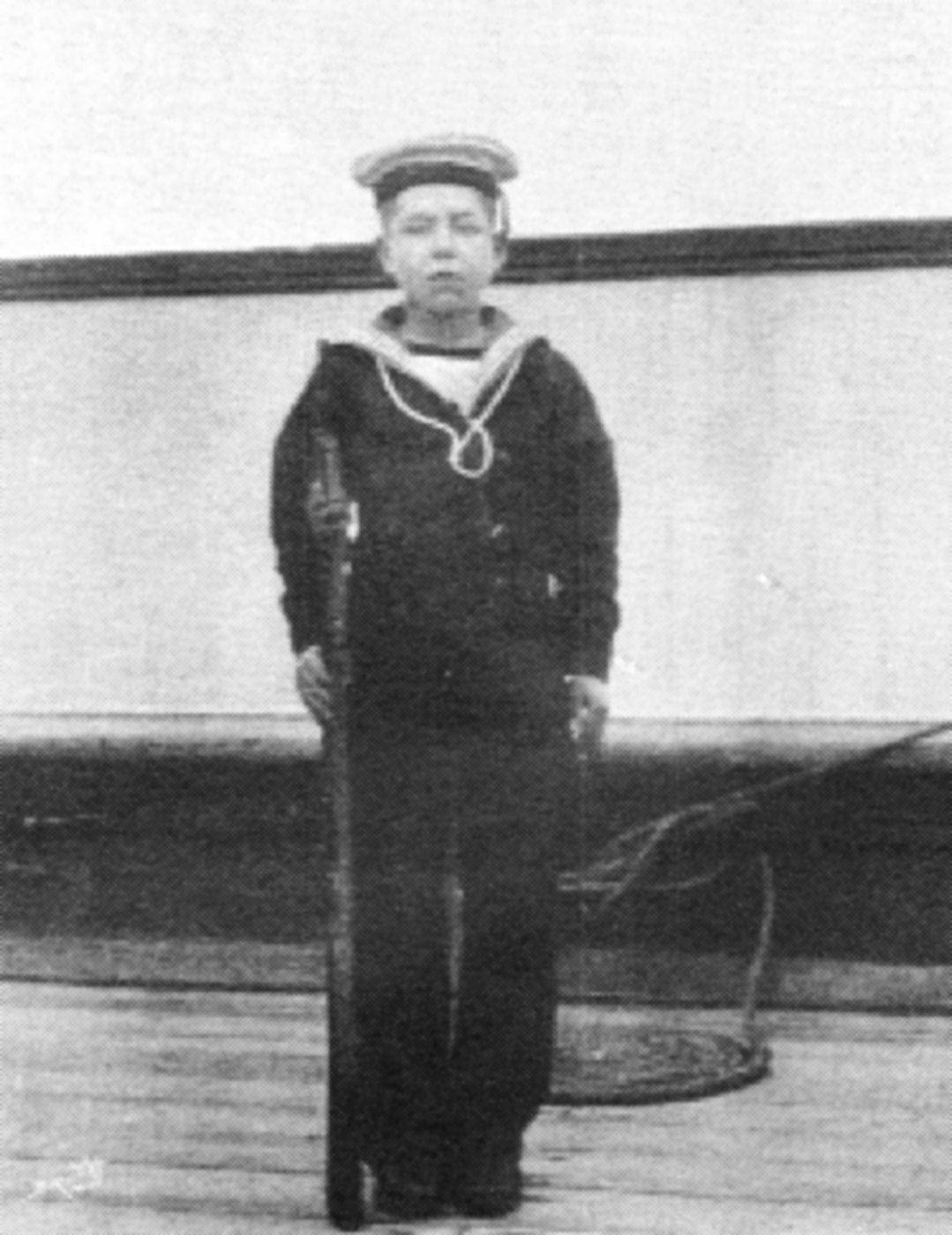
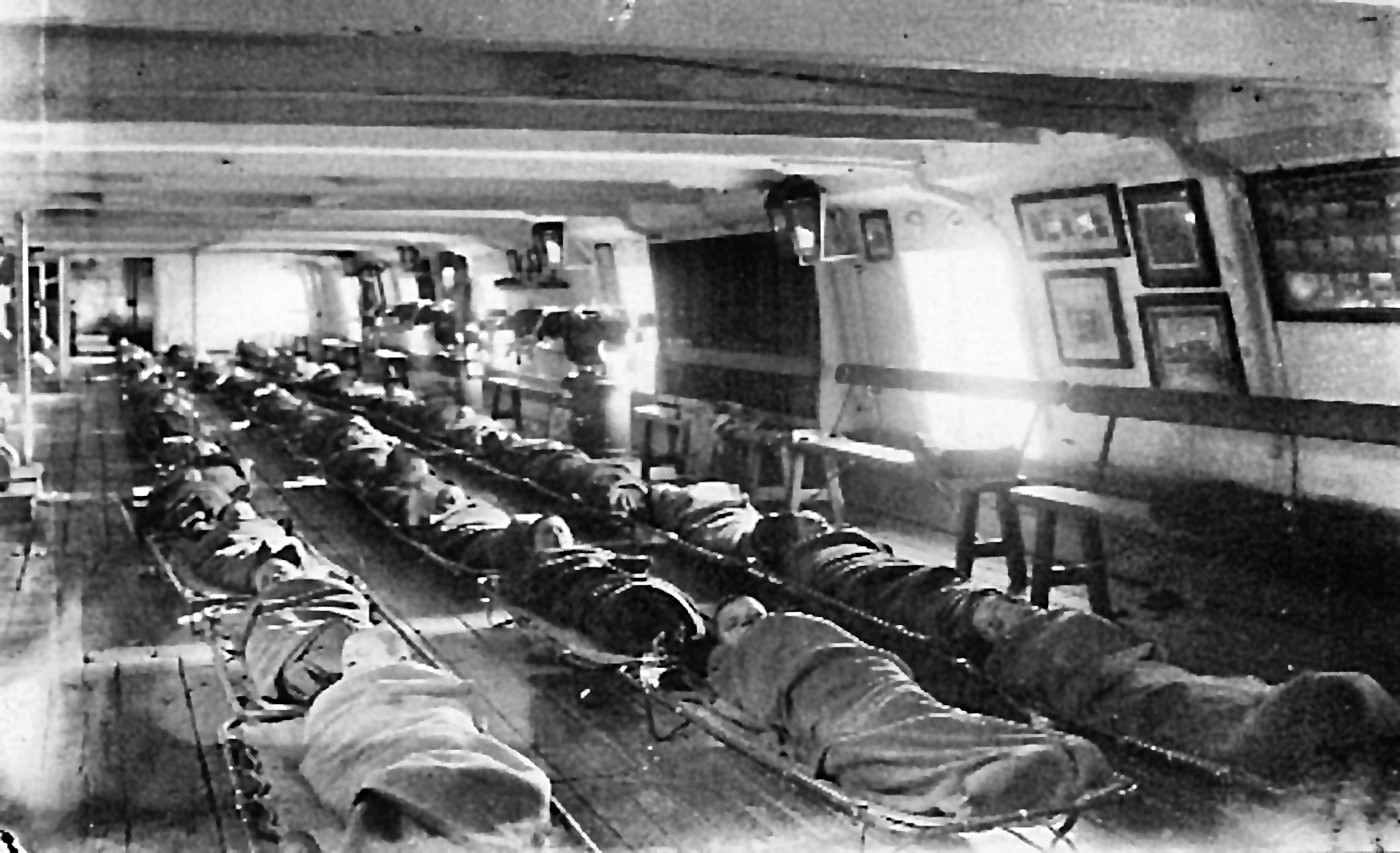
Life on the Clio ran to the bugle. The boys were divided into a port and a starboard watch, marked by a red stripe on one sleeve or the other. A day in the early years went roughly like this (pp.77–79):
| 5.30 (summer) or 6.00 | Bugle. Wash on the bath deck, stow bedding |
| 6.30 | Scrub the decks |
| 7.30 | Breakfast: oatmeal and milk, or bread and cocoa |
| 8.15 | Divisions (inspection), drill, prayers |
| 9.30 to 12.30 | One watch in school, the other at seamanship or a trade |
| 1.00 | Dinner, usually meat, potatoes and suet pudding, then play |
| 2.00 to 4.30 | The watches change over |
| Evening | Tea, play, boat practice or drill; prayers at 7.00 |
| 8.00 | All in bed |
The boys made almost everything they wore. Each had three suits, all cut and sewn aboard by the tailor boys, and the shoemaker boys made every pair of boots. In 1879 the ship produced 459 serge frocks, 458 pairs of trousers and 152 pairs of boots, and washed some 37,000 pieces of laundry (pp.77, 113).
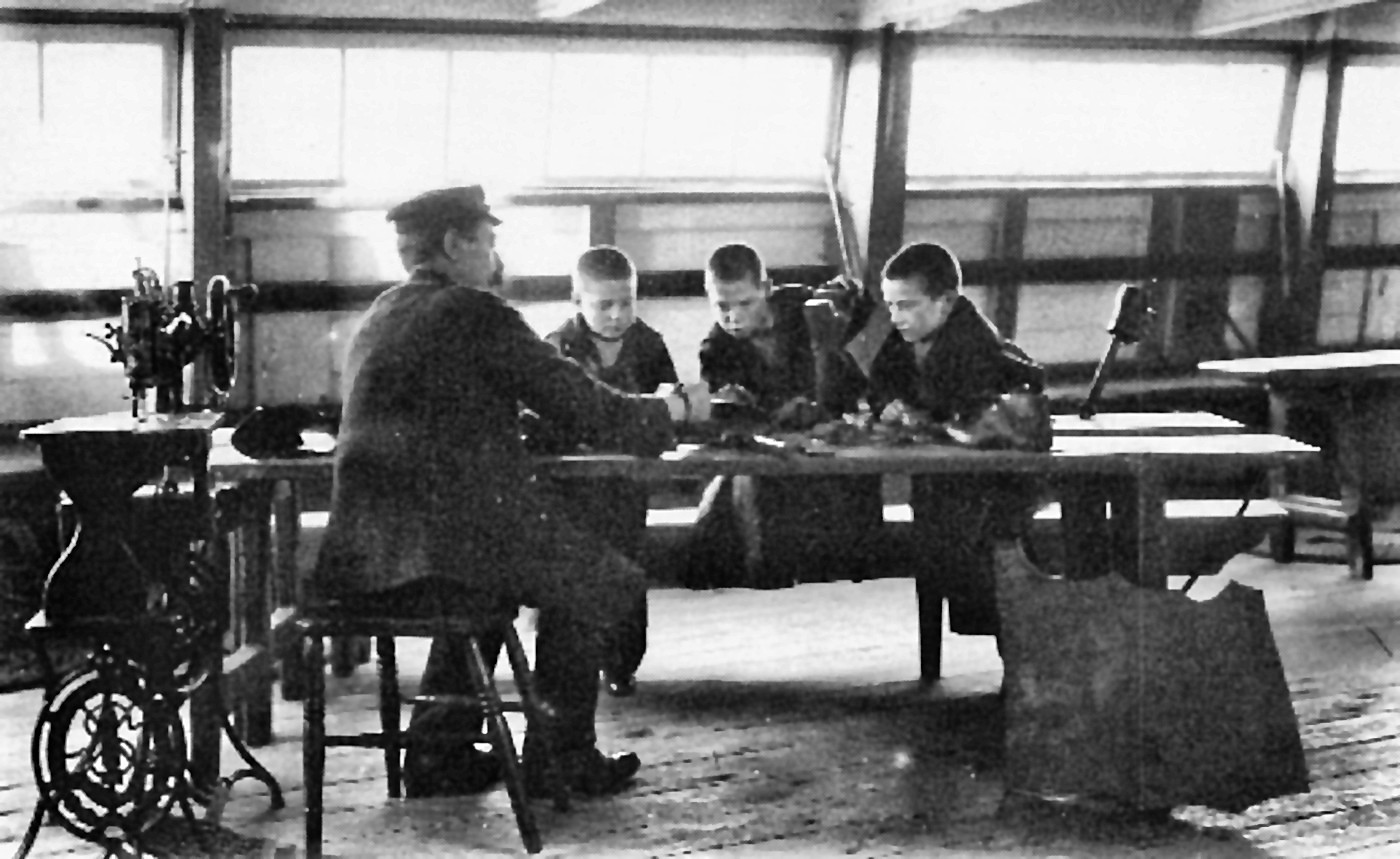
Discipline was strict. The rules allowed loss of privileges, reduced food, a few days in a lighted cell, or up to twelve strokes of the birch. Captain Moger’s view, in 1881, was that “flogging is for the bad and not for the good” (p.120).
The mooring was exposed to wind and tide, and the boys rarely got ashore. The winters were hard. In the winter of 1879 as many as fifty boys were on the sick list with frostbite at once, and “one poor little fellow lost some of his toes” (p.112). Flannel drawers were issued as a result. The work aloft was dangerous too. In August 1878 James Hemmett, aged eleven, from the Manchester area, fell from the yard-arm and died, five weeks after joining the ship. In 1880 John Heally was killed by a fall from the rigging (pp.76, 114). Boys who died aboard were buried in the churchyard at Llandegfan, across the water.
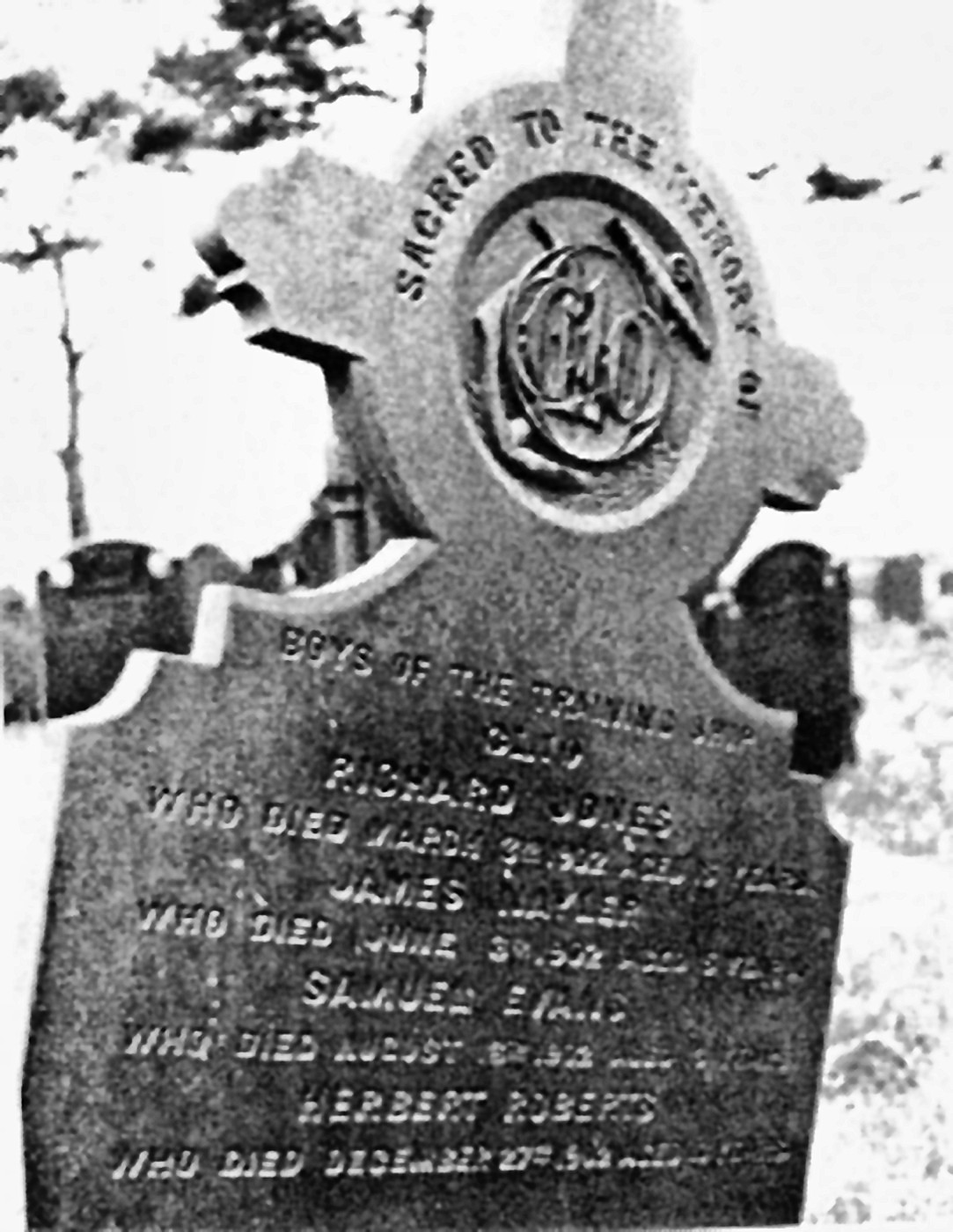
There were good days as well. The ship had a brass band that became famous across North Wales. There were fêtes in the grounds of the gentry’s houses, swimming in summer, and later football on Beaumaris Green and summer camps at Llandudno. Once a year the boys went by train to the Society’s meeting at Chester and marched through the city behind their band. In February 1880, 120 of them presented arms to Lord Richard Grosvenor (p.110).
School and seamanship
Each boy spent about three hours a day in school and the rest of his working day learning a trade. Lessons were in reading, writing, arithmetic, spelling, geography and singing. Mr Roberts prints examination papers set to boys at the naval training school Circe in the same period, as a guide to the standard such boys were expected to reach (pp.88–91). They are not easy: long division of pounds, shillings and pence, the troy weight of Bank of England gold, the coast from Dover to Newcastle.
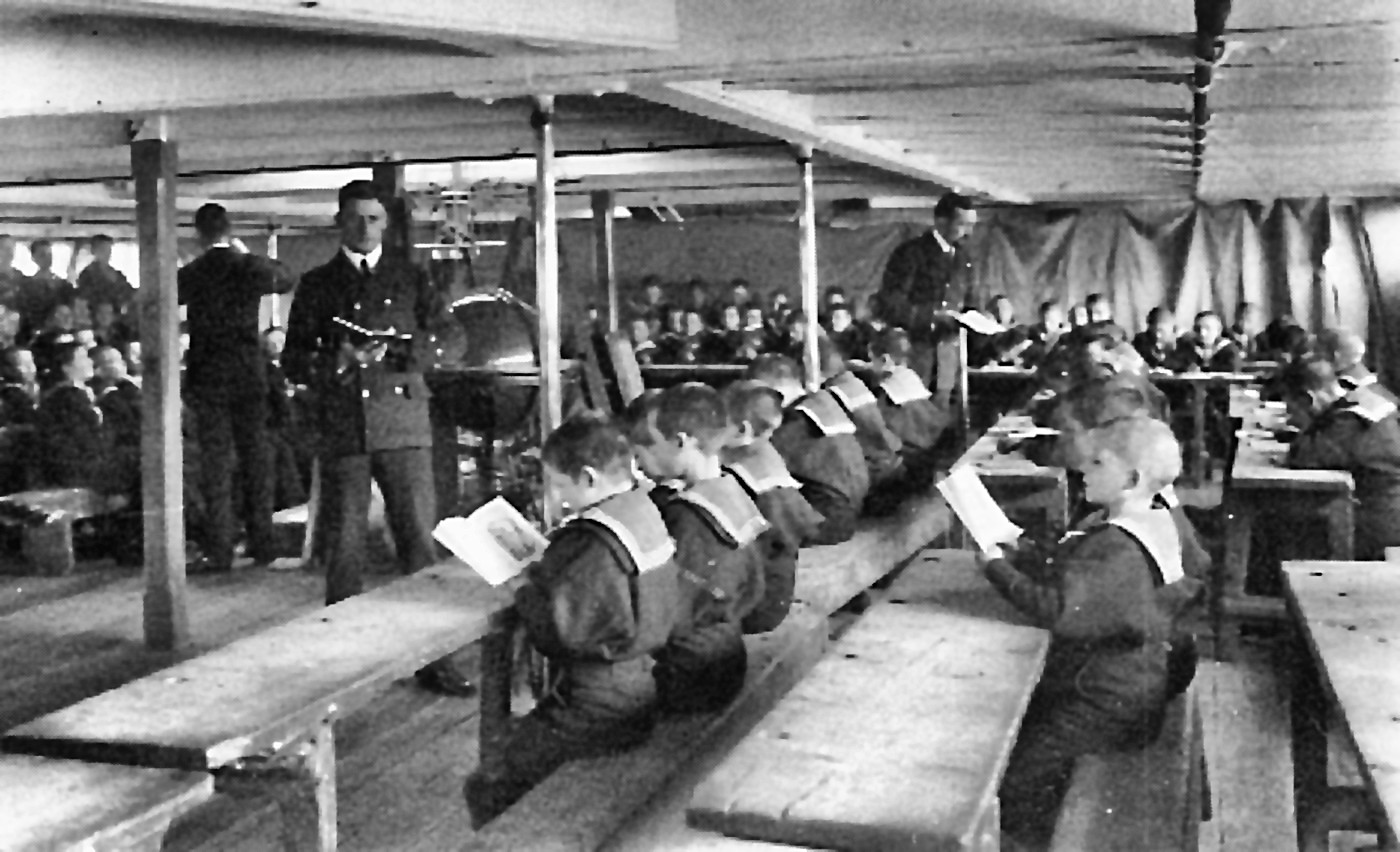
Seamanship was taught by old naval petty officers. The boys learned knots and splices, the compass, the lead and line, sail-making, the rule of the road and signals, and pulled the ship’s boats. In spring and summer they went aloft into the rigging. They also drilled with rifle and cutlass and learned gunnery (pp.103–104, 126).
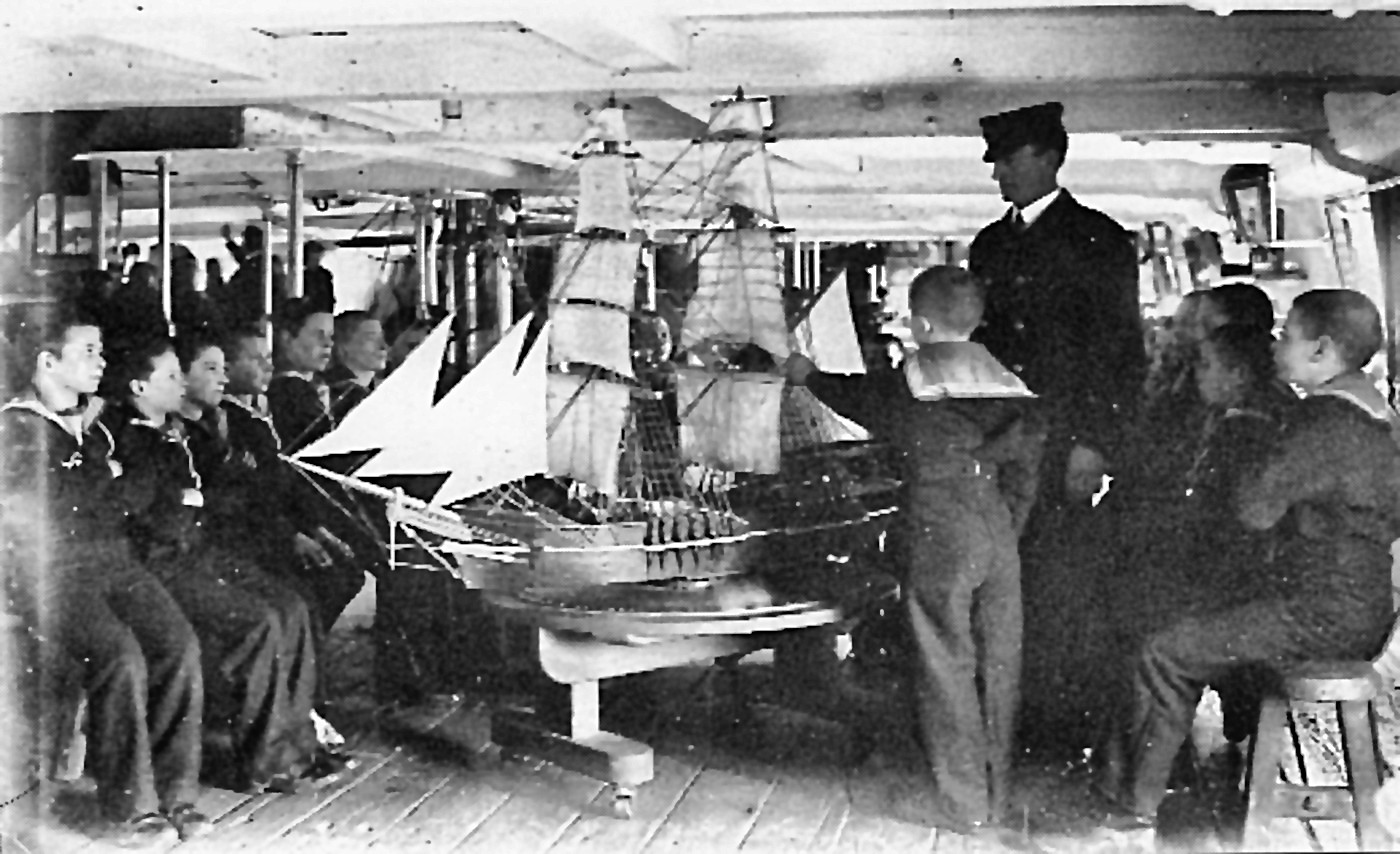
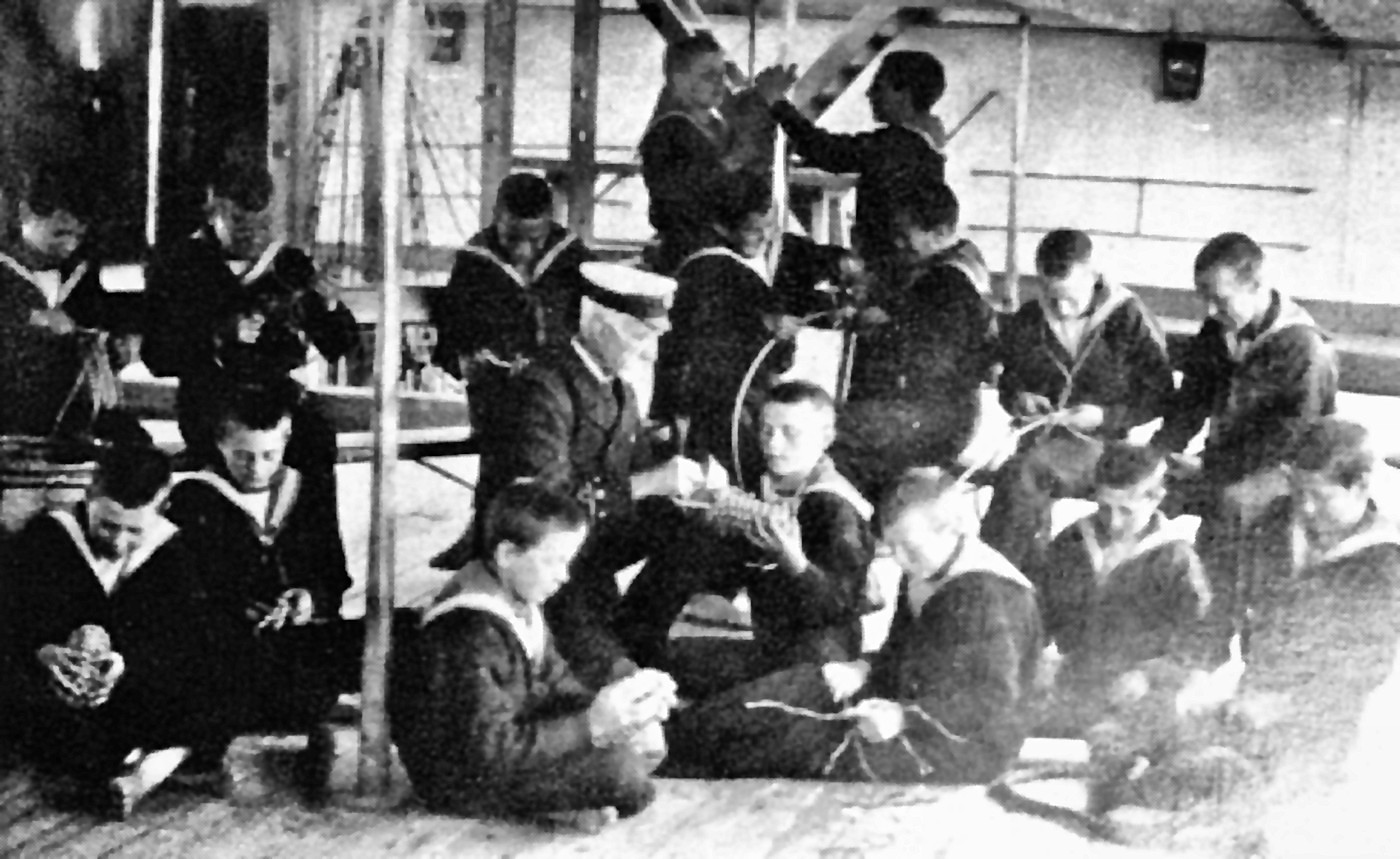
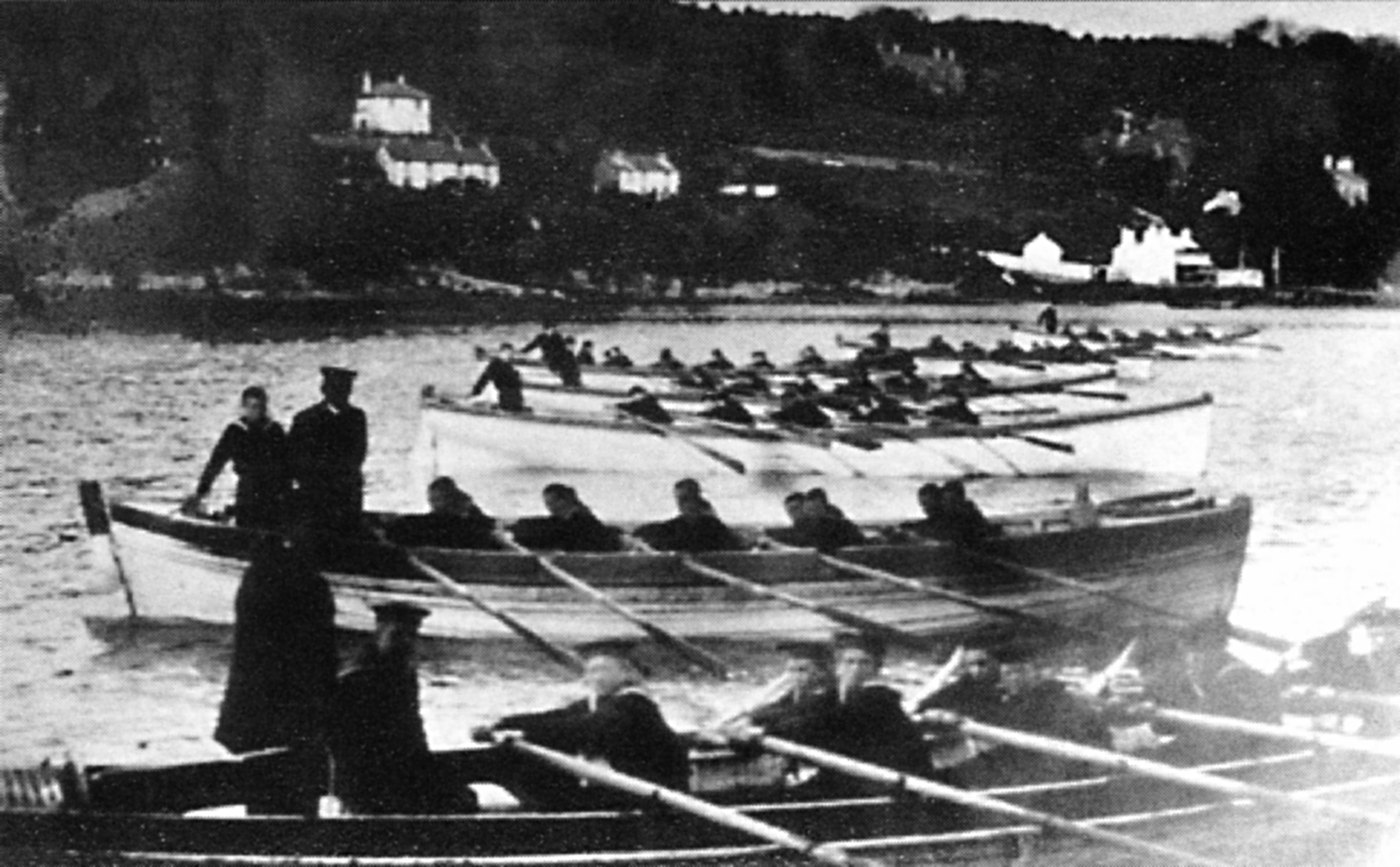
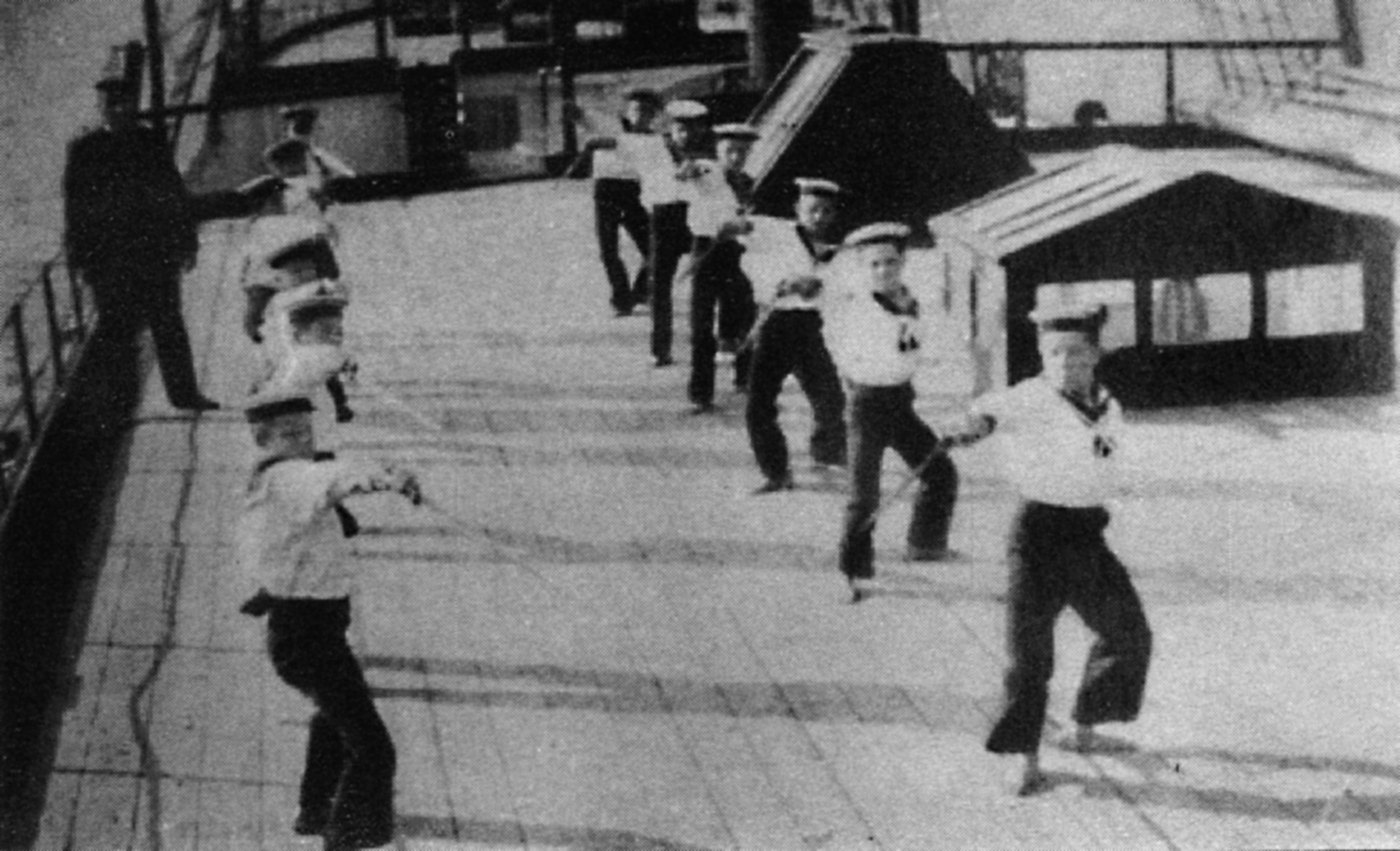
One thing they did not learn was engineering. The Clio‘s own engines had been removed before she came to Bangor, and the training was entirely in sail, seamanship and trades. Any boy who became a steamship fireman or engineer learned it at sea.
The years James was aboard
We do not know when James was sent to the Clio, or by whom. The ship’s admission registers, which would give his full name, date of entry and the court or board that sent him, have not yet been found. But if he was the boy listed in 1881, he lived through the busiest years of the ship’s history.
- 1879: the hard winter and the frostbite. A swimming bath, band room and drying room were built.
- 1880: a long forecastle was built on deck for a carpenter’s shop, sick ward and tailor’s shop. A shipping agent was appointed at Liverpool to find berths for the boys. That year 29 of the 37 boys who left went to sea (pp.114–115).
- 1881: 244 boys aboard on census night. The annual report said nearly 100 old boys had been given a good start in life, 74 of them at sea. One, turned down by the Naval Reserve for being “a quarter of an inch too short”, had joined the American Navy (p.119).
- 1882: typhoid in Bangor reached the ship and two boys died. A Home for Clio boys was opened in Liverpool, where old boys could stay between voyages (p.121).
- 1883: the ship was so full that admissions were stopped (p.122).
Where the boys went
A boy usually left the ship at about fifteen or sixteen. The rules required him to be given an outfit and, if possible, a place at sea. From 1880 the Liverpool agent signed boys on to merchant ships, and the Liverpool Home gave them a base ashore. Many went to sea; some went home to their families and never sailed again; a few joined the Army or the Royal Navy, which was suspicious of industrial-school boys. By about 1904 the ship had trained 2,018 boys (p.142). In the First World War, 124 old boys were in the Army and 122 in the Navy, and a Portsmouth flag captain called the Clio “the only sure and satisfactory supply I have” (p.162).
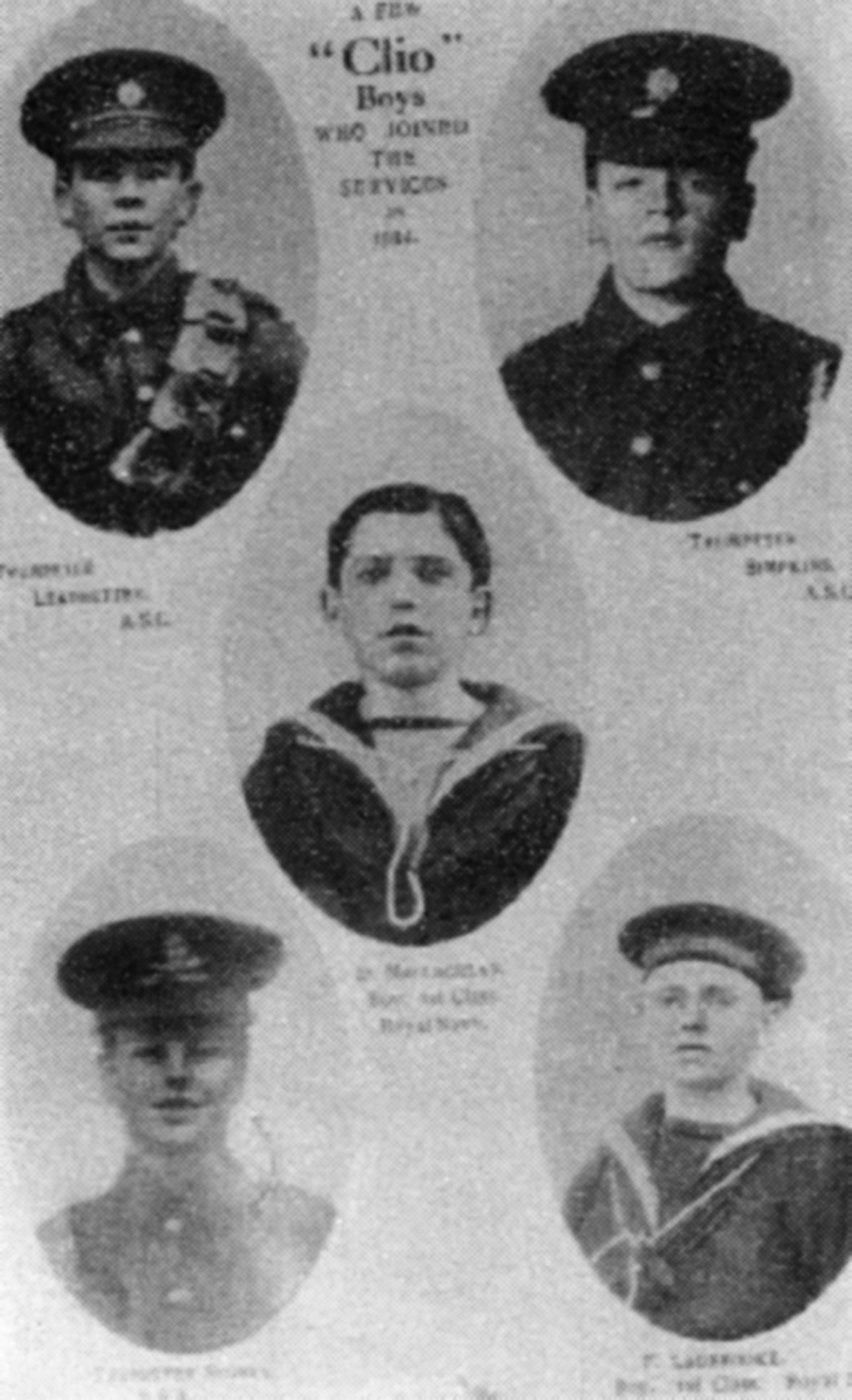
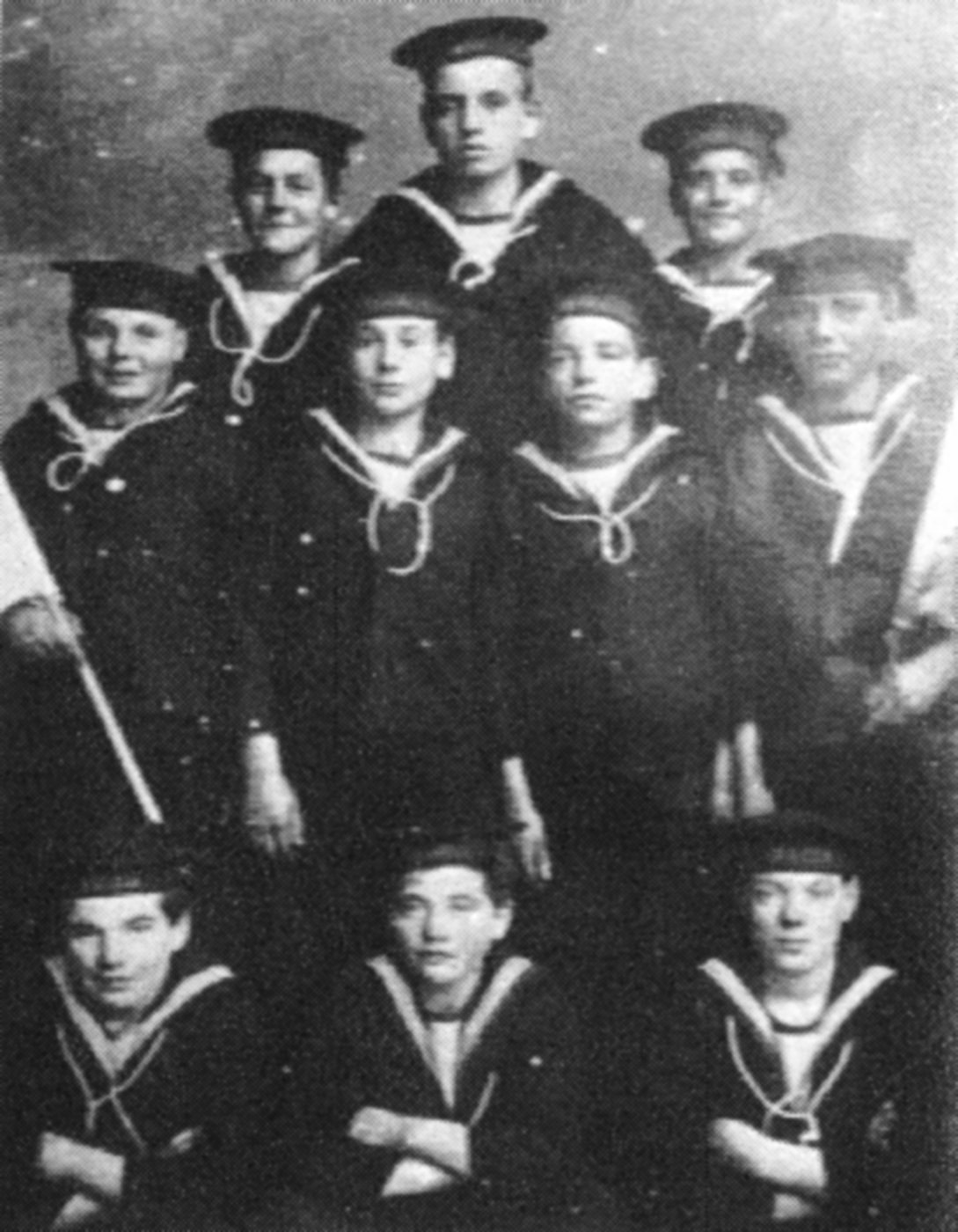
The old boys’ letters were printed in the annual reports. Only one survives in Mr Roberts’s book, from a boy signing himself A.R.D., writing from the Navy’s barracks at Shotley in 1914 or 1915. He said the Clio had taught him nearly all his work, and signed off “with an old boy’s love for his ship” (p.172).
James’s path
Here is what we know, and how it fits.
- James was born in Manchester on 24 February 1869. He is the only James Wilkinson of any kind registered in the Manchester district between 1866 and 1871.
- His mother died in 1875, and by 1881 his father had a new wife and family in Chester, without him.
- No James Wilkinson born in Manchester at about that time appears anywhere in the 1881 census except, as “J W”, on the Clio. He was the only Wilkinson among the 244 boys aboard. The other Manchester-born J. W. Wilkinsons of the right age have been traced elsewhere or died young.
- The census gives his age as 11. He was in fact 12. Ages on institution returns were often filled in by staff and are frequently a year out.
- In Hawaii he was always “J. W. Wilkinson”, the same form as the census entry.
- The 1900 United States census says he came to Hawaii in 1888, aged 19. A newspaper notice of June 1888 lists a “Wilkinson” arriving at Honolulu on the brig Hazard from New Zealand by way of the Marshall Islands. Whether this is James is not yet known.
- By 1890 he was a fireman on the Inter-Island steamer Mikahala. He rose to second and then chief engineer, and in 1904 he took charge of the steam pumping engine at the Kalihi pumping station. He died in 1909, aged 40.
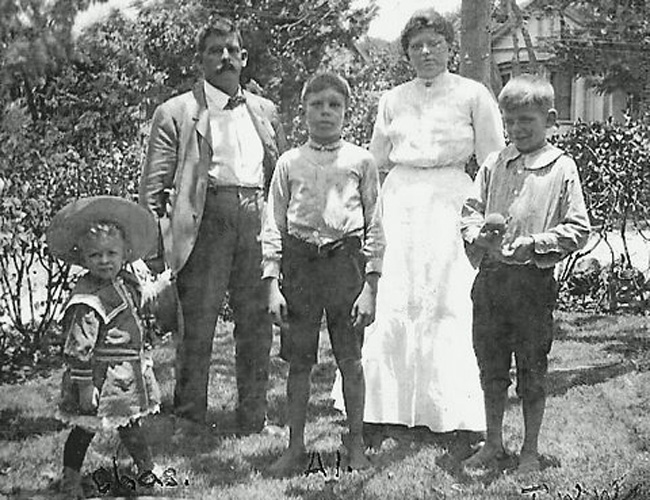
None of this proves that James was a Clio boy. But every piece of evidence points the same way, and none points against it. A motherless Manchester boy, apart from his father’s new family, on a training ship that drew 65 of its 263 boys from Manchester and was governed from Chester, who then went to sea and spent his life on ships and steam engines: the Clio explains how he came to be in the Pacific at nineteen.
Still looking
The Clio‘s admission and discharge registers would settle the question. Anglesey Archives do not hold them. Enquiries are with Gwynedd Archives, Cheshire Archives (closed for a move until early 2027) and the National Maritime Museum. Denbighshire Archives hold some of the ship’s annual reports for 1880–87. If you know where the registers are, or have a Clio boy in your own family, we would be very glad to hear from you.
The end of the Clio
The ship’s later years had their share of trouble. In 1906 a thirteen-year-old boy from Bury, William Crook, died after being knocked down by older boys, and the case reached the House of Commons. Mr Roberts tells the story in full in his thirteenth chapter. Captain Moger retired in 1899 and was succeeded by Commander F. G. C. Langdon, who ran a gentler ship until the end.
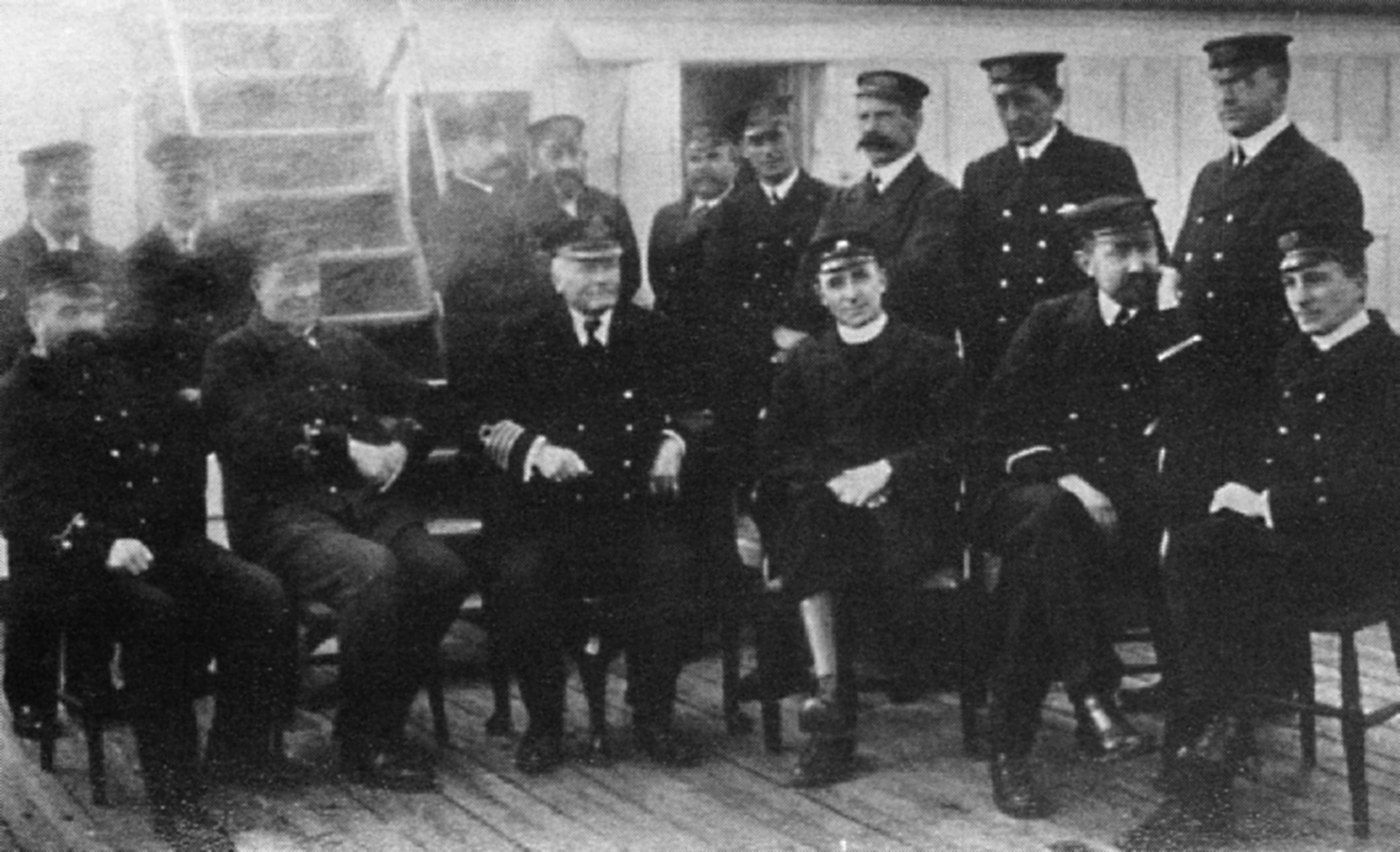
By the end of the First World War the old corvette’s timbers were rotting, and the 1918 Education Act had made half-time schooling of this kind a thing of the past. The Society gave up its certificate in May 1919. On 21 March 1920 the Clio was towed to Garth and broken up, and her fittings were sold at auction that April (p.167). A charity that grew out of the Society, the Hayley and Clio Educational Fund, survived to help orphaned children in North Wales and Cheshire.
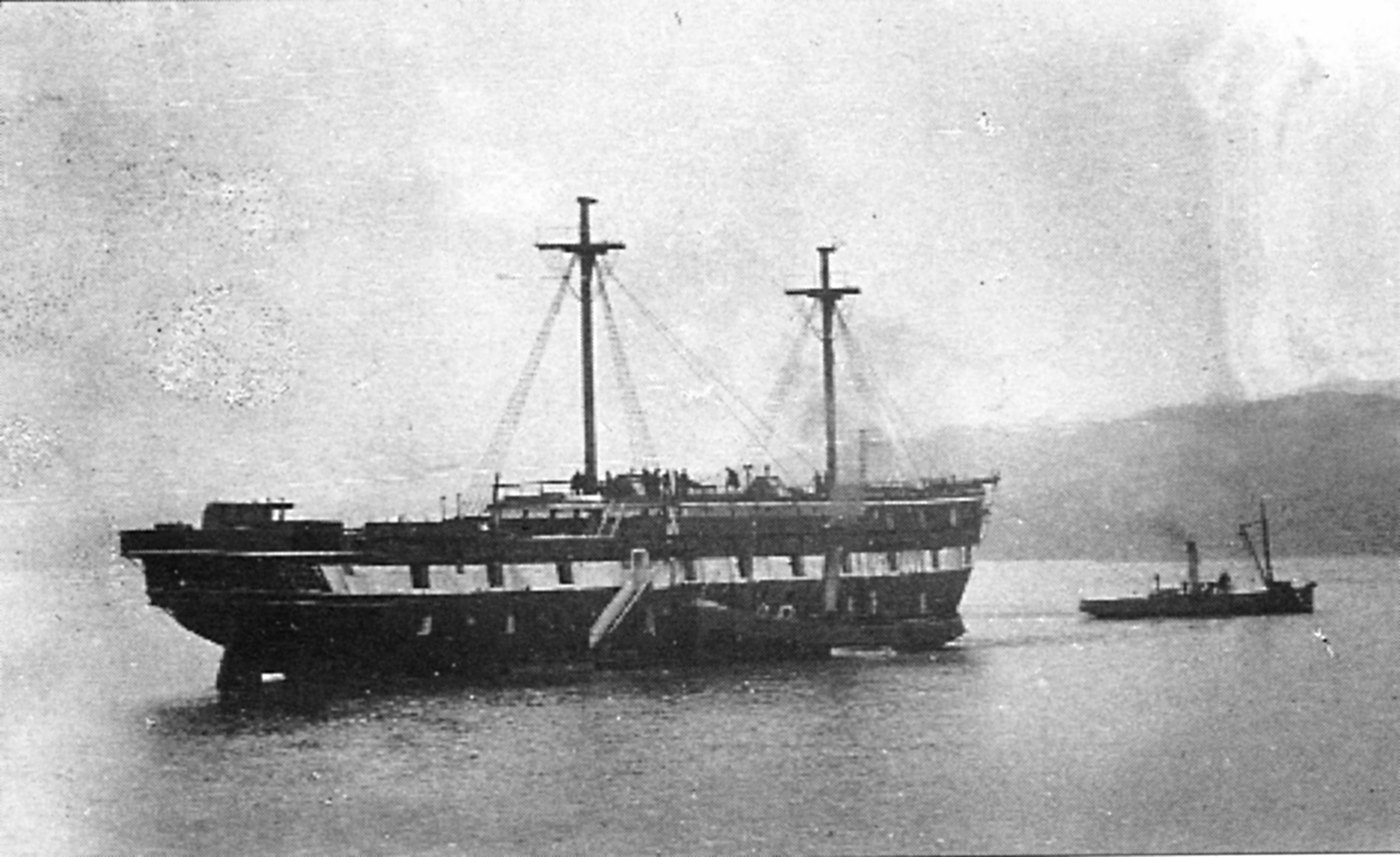
Mr Roberts’s own verdict is a fair one. The training ships never turned most of their boys into sailors, and life aboard was difficult and harsh. But for many of the boys the Clio was “the nearest they had seen to a home” (p.171).
The book. Emrys Wyn Roberts, The ‘Clio’ 1877–1920: A Study of the Functions of an Industrial Training Ship in North Wales (Llygad Gwalch, 2011; ISBN 978-1-84524-180-3) is the full history of the ship, based on the author’s research in the Home Office files, the ship’s annual reports and the North Wales newspapers. It covers far more than this article, including the ship’s founding, her captains and staff, the 1906 tragedy, and many photographs of the boys and the ship.
It is available from the publisher, Gwasg Carreg Gwalch: carreg-gwalch.cymru/products/clio-the
Sources for James William Wilkinson: 1881 census of England and Wales, RG11/5574, folio 123, page 11 (Industrial Training Ship Clio); FreeBMD birth index; 1881 census, 28 Lyon Street, Chester; 1900 United States census, Hawaii (aboard SS Claudine); Honolulu city directories, 1890–1909; Daily Bulletin (Honolulu), 4 June 1888; Pacific Commercial Advertiser, Hawaiian Star, Evening Bulletin and Hawaiian Gazette, July 1909. The photographs of the ship and boys are reproduced from Mr Roberts’s book, with page numbers; they were taken between about 1900 and 1920 and are long out of copyright. The four moving pictures were made with AI (Kling, through Runway) from colourised copies of the book’s photographs: they show how the scenes might have looked, not real film. Family records and documents at lordoflucies.com/tng.