

Brickens and Letterfir
In June 1920 Dudley Walsh and Mary Vahey were married in Dedham, Massachusetts. He came from Letterfir, on the Connemara coast west of Galway; she came from Brickens, near Ballyhaunis in County Mayo. Both had grown up in the west of Ireland in the last decades of British rule, and both families turn up, again and again, in the registers of the local petty sessions courts: for broken windows, wandering cattle, unpaid rates, a confrontation with a process server, a brawl between neighbours, and two gallons of poitín. Read together, the court entries open a window on the world their parents lived in.
A cabin at Brickens
County Mayo in the 1880s was a country of small fields walled with grey stone, wet pasture and bog, under a sky that seemed to rain most days. The land around Ballyhaunis rolls gently, but it is heavy, poor ground, divided into scraps. A family like the Vaheys farmed a few acres in patches. The house would have been long and low, of whitewashed stone under thatch, with a half-door to let in the light and keep out the hens. Inside was one main room around a turf fire that was never allowed to go out, a dresser with the good plates, a settle bed by the hearth, and the smell of smoke, wet wool and potatoes.
Potatoes were still the heart of everything: planted in ridges in spring, dug in autumn, and eaten at nearly every meal with buttermilk, a bit of salt fish, and cabbage when there was any. Oats paid the rent. The pig was the family’s savings, fattened on scraps and sold at the fair. Dogs were working animals, and the Vaheys’ dog licences appear in the court records year after year from 1882.
Thomas Vahey, born about 1821, was in his twenties when the potatoes turned black in 1845. He would have known families who went into the workhouse at Claremorris and never came out, cabins levelled after the people died or left, and the long roads to the emigrant ships. Mayo lost about a third of its people in a few years. That memory hung over everything that came after, and helps explain why the next generation would not go quietly.
The Land War
In 1879 the potatoes failed again, and this time the people organised. That April a mass meeting at Irishtown, in the same corner of Mayo, launched what became the Land War; the Land League followed within months. Speakers stood on carts at crossroads and in chapel yards and told the crowds that the land belonged to those who worked it. Neighbours rallied round evicted families, and anyone who took an evicted family’s farm found that no one would speak to him, sell to him or work for him. Captain Boycott, a land agent at Lough Mask, gave the world his name.
The government answered with coercion. Under the Criminal Law and Procedure (Ireland) Act of 1887, districts could be “proclaimed,” and offences there tried by magistrates without a jury. Brickens was in a proclaimed district. On 16 March 1888 Thomas Vahey’s son Anthony, then twenty-two, was charged with wilfully resisting and obstructing Thomas Rogers of Ballyhaunis, a process server, at Brickens. A process server carried the papers that began the road to eviction, and he did not usually travel alone. The register does not say what happened that day, or whose papers Rogers was serving.
Anthony did not appear when the case was called on 9 April, and a warrant was issued for his arrest. Then the case was adjourned for six months, adjourned again in October, and reached its last entry on 17 November 1888; the word recording the outcome is illegible, and the case seems simply to have been let go. That was a common ending. Sometimes the landlord came to terms; sometimes the authorities thought better of making another local hero.
Fair days and the petty sessions
Life had its rhythms. Sunday Mass was the great weekly gathering, with news, gossip and matchmaking in the chapel yard afterwards. Fair days in Ballyhaunis brought the whole district into town: cattle and sheep in the streets, dealers slapping palms to close a bargain, ballad singers, and the public houses full by evening. Old grudges came to the surface.
Once a month came the petty sessions in the courthouse, where the magistrates sat and the constabulary read out the cases: unpaid rates, straying cattle, drunkenness, assault, abusive language. A summons cost pennies, and it put a grievance on record before the whole parish. The Vaheys used the court as freely as anyone, and their neighbours the Hartes were their most faithful opponents.
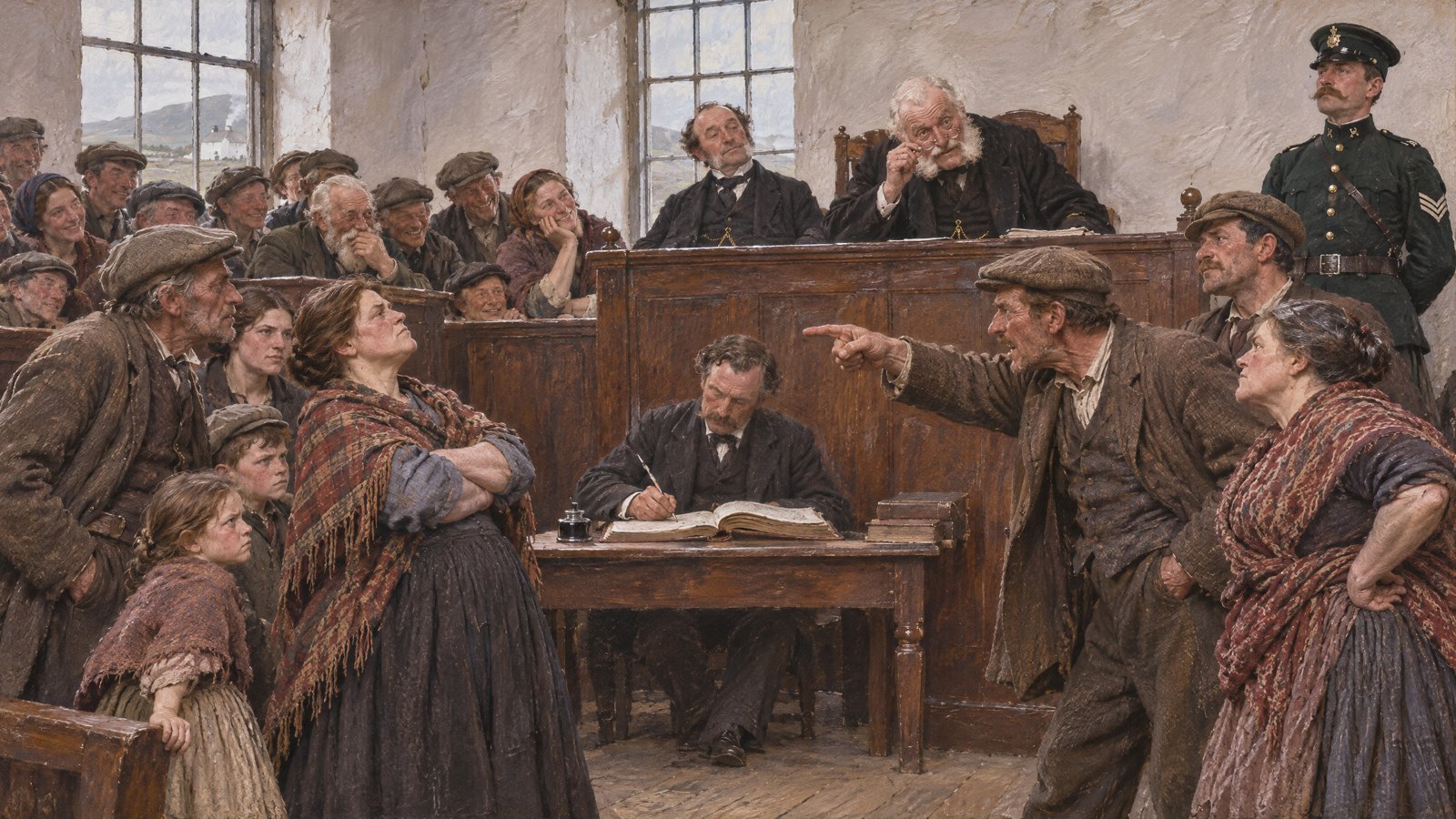
- 1876. Catherine Hart threw stones at Pat Vahey’s house and broke the windows (13 June). Fined 2s, with 1s 6d compensation and 1s 6d costs. Bridget and Margret Vahey gave evidence.
- 1888. Anthony Vahey: obstructing the process server (above). Thomas Vahey: unpaid poor rate to the Claremorris Union.
- 1893. Patrick Vahey summonsed Patrick Flanagan of Brickens for assault (3 September).
- 1898. Thomas Vahey: poor rate of 6s unpaid.
- 1899. Bridget Vahey summonsed Catherine Harte for assault (June). On 1 August five summonses for assault were heard together: Mary Harte against Bridget Vahey, Bridget Harte and Catherine Harte against Patrick Vahey, Bridget Vahey against Mary Harte, and Patrick Vahey against Catherine Harte.
- 1902. Anthony Vahey: county rate of 12s 6½d unpaid to Mayo County Council.
- 1911. Michael Harte and Pat Vahey each summonsed the other for threatening and abusive language, each asking that the other be bound over to keep the peace.
The great Harte–Vahey battle of 1899 came in the weeks just before Anthony’s wife Winifred gave birth to twins, Mary and John, on 5 August. And in almost every one of these cases the register records the same outcome: no appearance. Nobody turned up. Perhaps the priest, or a neighbour, or simple second thoughts had made the peace before the court sat. Thirty-five years after the stones went through Pat Vahey’s windows, the two families were still summonsing each other.
Connemara
Forty miles to the south-west, Letterfir was another world again. Connemara is rock, bog, lake and sea, with little fields scraped out between the boulders and seaweed carried up from the shore in creels to make the soil. The people spoke Irish; English was the language of the court, the police and the landlord. Peter Walsh, born about 1840, could read and write in neither: the 1911 census records him as unable to read. He and his wife Honor raised nine children at Letterfir, living on potatoes, fish, a few cattle, and what could be earned from the shore. In August 1877 Peter was fined a shilling and costs because five of his cattle had wandered onto the public road at Bohoona.
In a place like that, making poitín at home made good sense. All it took was barley, turf for the fire, a stream to cool the coil, and a small still hidden where the police were unlikely to look: in a fold of the hills, on an island in a lake, or sometimes under a loose hearthstone in the cabin itself. A poitín pot was not much bigger than a large cooking pot, and two men could carry it off over the hill. There was always a market among the neighbours and at the fairs. Poitín was part of weddings, wakes and Christmas, and the police raids were a long-running contest.
On 6 May 1897 Sergeant George Miller of the Royal Irish Constabulary found two gallons of “private concealed spirits” at a place in Letterfir occupied by Peter Walsh. At the Spiddal petty sessions on 2 June Peter was convicted under the excise laws and fined £100, a sum no Connemara smallholder could have paid. The magistrates mitigated it to £6, still a heavy fine for a family living largely without cash, with three calendar months in prison if he did not pay. Among the witnesses were William, Michael and Thomas Walsh, probably his sons. Whether Peter paid or served the three months, the register does not say.
Leaving
Through all these years the young went away. Every family had someone in Boston, New York, Manchester or Liverpool. Letters came home with dollars folded inside, or a prepaid ticket for a younger brother or sister. Each summer men went to England and Scotland for the harvest and came back in the autumn with money for the rent. The “American wake” was held the night before an emigrant left, with music, dancing and keening, because the family knew they might never see them again.
Family memory says that Mary’s twin brother John was meant to go to America, and that when he could not, Mary went in his place. In the autumn of 1916, with a war being fought at sea, she crossed to Liverpool and boarded the American Line’s Philadelphia. She landed at Ellis Island on 1 October, seventeen years old, a servant, bound for Boston. Her passage, the manifest says, was paid by her uncle, a McGarry, her mother’s brother, living on Somerville Avenue in Somerville, just outside Boston. He was Thomas McGarry, born at Drimbane in 1877, who had come to America as a young man, worked as a coachman, married a fellow Irish servant in 1909, and was by then a labourer at 421 Somerville Avenue. Five weeks before Mary landed, his wife Annie (born Cannon) had died in that house; her funeral mass was at St Joseph’s and she was buried at St Paul’s Cemetery in Arlington. The nearest relative she left behind was Michael McGarry of Drimbane. John stayed on the other side of the Atlantic and later made his life in Manchester, England, where he died in 1953.
Upstairs, downstairs
Dudley Walsh, a son of the Letterfir poitín maker, had gone four years before her. On 22 June 1912, ten weeks after the Titanic went down, he landed in Boston from the Parisian, out of Londonderry: twenty-one, a labourer, five foot nine, with fair hair, grey eyes and fifteen dollars in his pocket. His fare had been paid by his brother William, who was waiting for him at 8 Rockhill Street in Norwood, south of Boston. Two lines above him on the manifest, a Delia Faherty was bound for her own brother on the same street. One brother brought the next, and the Connemara people kept together.
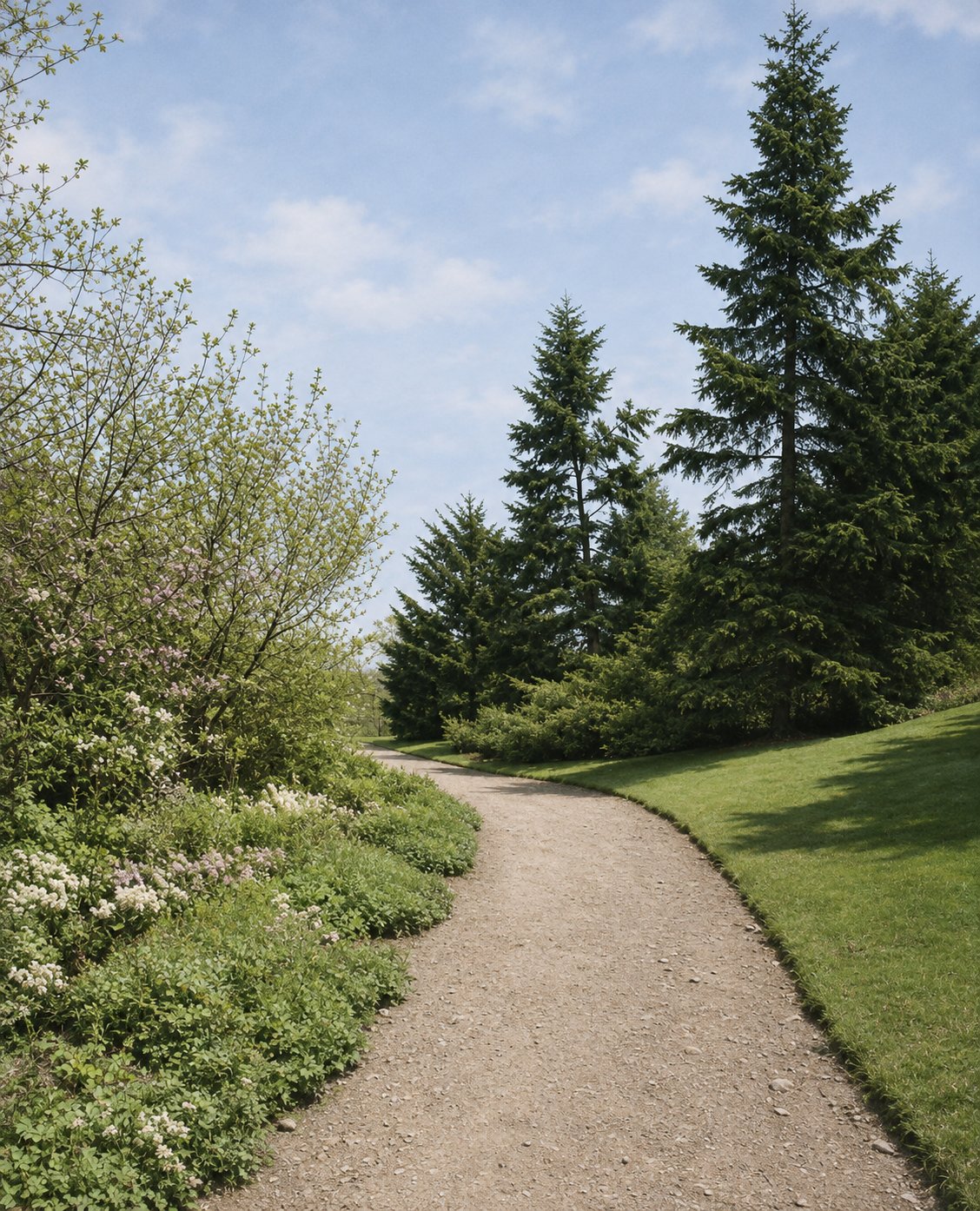
By 1917 Dudley was working for Stephen Minot Weld at Rockweld, his estate in Dedham: some fifty acres behind a high stone wall on a crag above the Charles River, with one of the finest rock gardens in the country, a dozen greenhouses and eight gardeners. In January 1920 the census taker came down the estate road and wrote the whole hierarchy onto a single page. At the top are Stephen M. Weld, seventy-eight, and his wife Edith, with five live-in servants: three Irish women, a Russian and a Swede. Below them comes the Swedish head gardener and his family, and further down the household of Michael Monahan, manager of the estate, with a row of Irish boarders, all labourers on the private estate. The last of them is “Dudley Welch,” twenty-five.
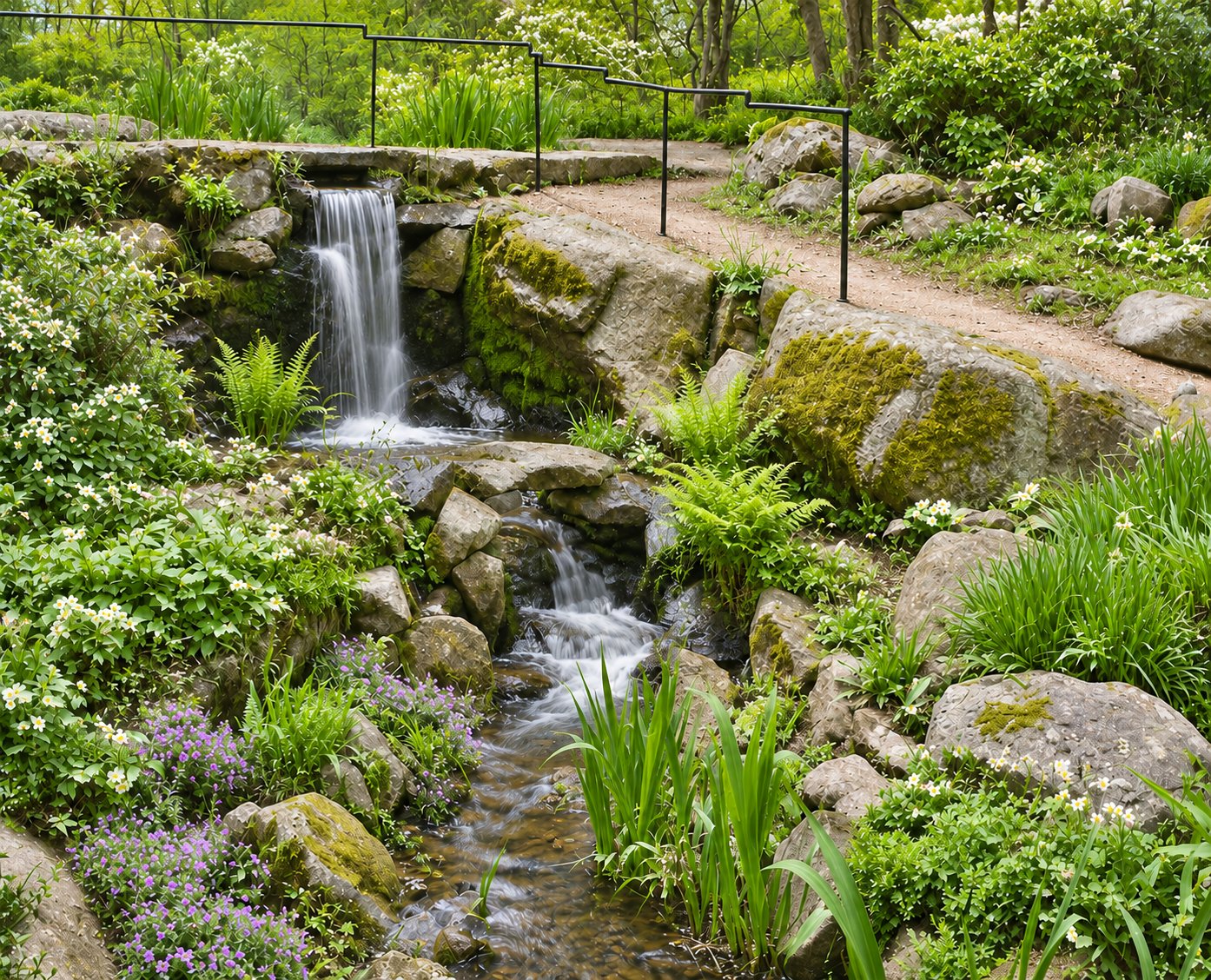



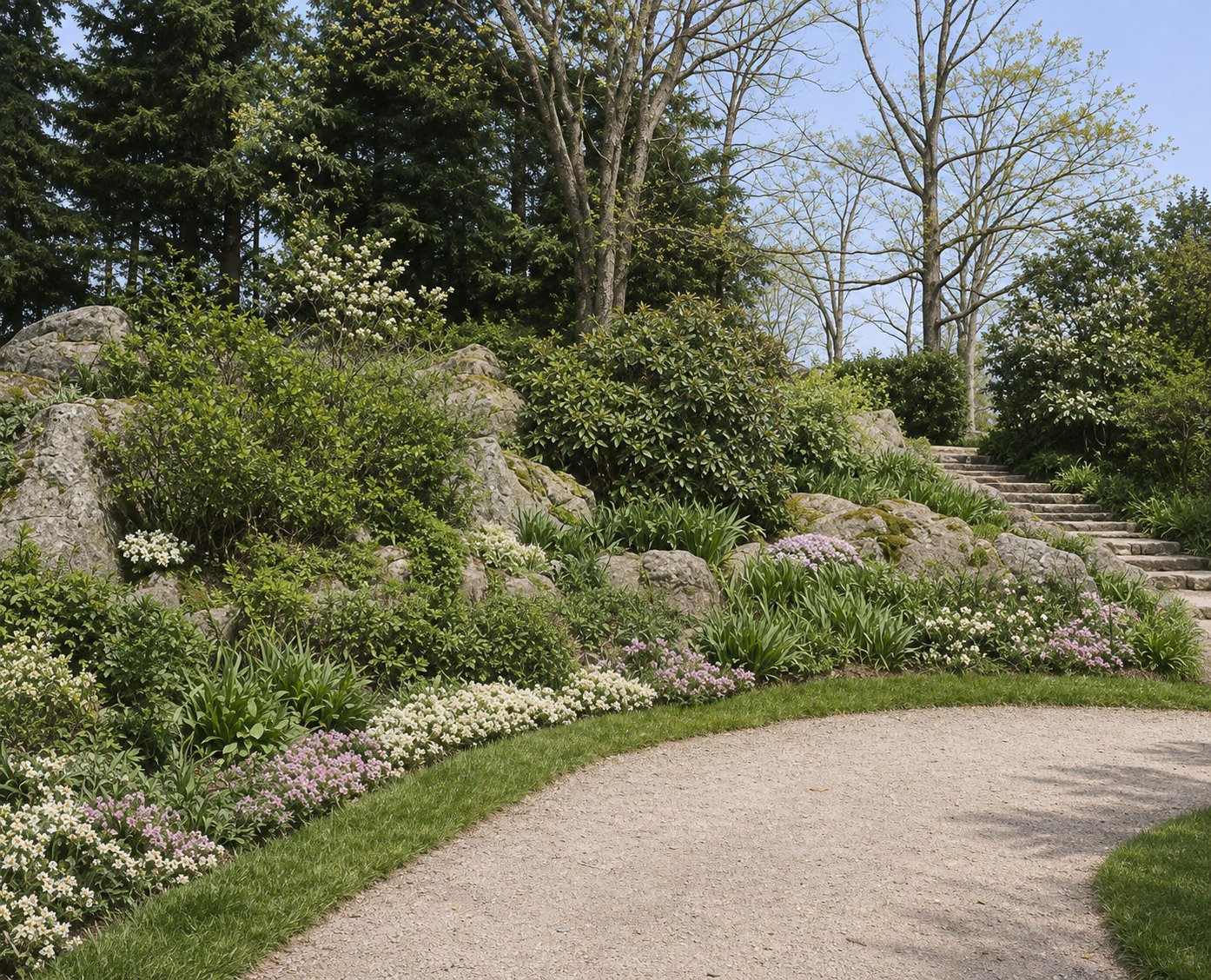
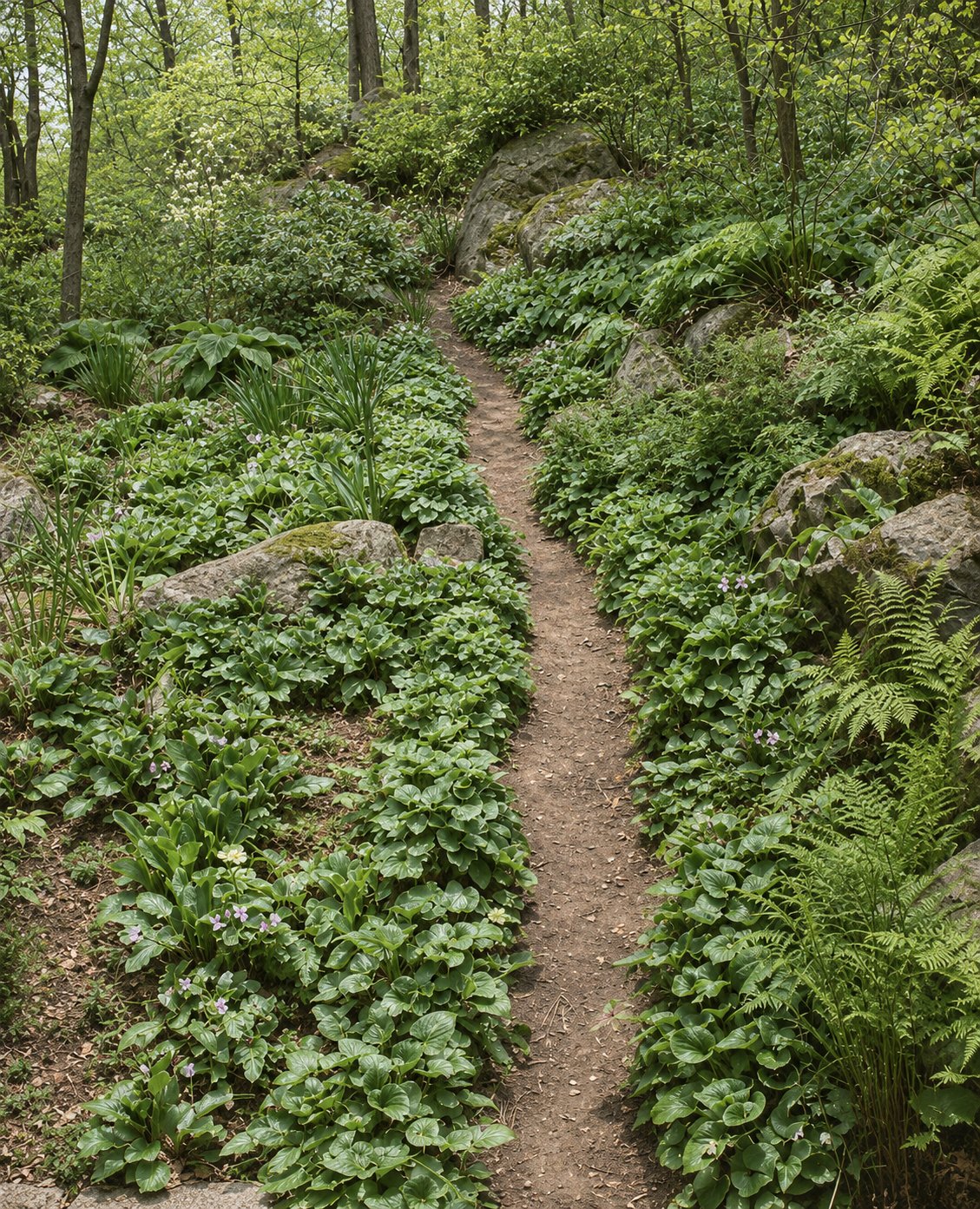
Mary, meanwhile, was in the Back Bay. The same census found her at 49 Hereford Street, a tall brick townhouse just off Commonwealth Avenue, as a waitress in the household of Gerald Dorr Boardman, a real-estate broker, and his wife Elizabeth (Devens) Boardman, who had lately come to Boston from Auburn, New York. (The census taker wrote him down as “John D. Boardman.”) A waitress in such a house was a parlourmaid who served at table: up before the family, down the back stairs in a black dress and white apron, and up again at night to a room under the roof.
How a waitress in the Back Bay came to meet a gardener in Dedham, no record says. The great houses knew one another, and so did the people who worked in them: Irish maids and Irish gardeners met at Mass, at parish dances and on their afternoons off. Five months after the census, on 6 June 1920, Mary and Dudley were married in Dedham. He gave his age as twenty-nine; she said she was thirty, though she was twenty. Their son John was born in Boston in April 1921, and Dudley junior in Dedham in 1923. By 1930 the family had moved to Weare, New Hampshire, where Dudley was again a gardener on a private estate.
Sources
- Ireland, Petty Sessions Court Registers (National Archives of Ireland, via Findmypast). Ballyhaunis court: 1876 (register 4580880, pp. 137, 143); 1888 (4580900, pp. 269, 277, 463, 480, 497); 1893 (4580902, p. 150); 1898–99 (4580903, pp. 565, 807, 832); 1902 (4580904, p. 386); 1911 (4580906, p. 226). Spiddal court: 1877 (4582109, p. 764); 1897 (4619049, p. 820). Dog licence registers, 1882–1918.
- Census of Ireland, 1901 and 1911, Letterfir, Killannin (National Archives of Ireland).
- Passenger manifest, SS Philadelphia, Liverpool to New York, arrived 1 October 1916 (Ellis Island).
- Passenger manifest, SS Parisian, Londonderry to Boston, arrived 22 June 1912. U.S. World War I draft registration, Dudley Walsh, Dedham, 5 June 1917.
- U.S. census, 1920: Dedham, Norfolk County (enumeration district 186, sheet 7A) and Boston Ward 8 (enumeration district 234, sheet 8A); 1930: Weare, Hillsborough County, New Hampshire. Death notice of Annie McGarry, Boston Evening Globe, 25 August 1916. The history of 49 Hereford Street at backbayhouses.org.
- Mary H. Northend, photographs of the Weld estate garden, Dedham, Massachusetts (Historic New England, “Weld Estate garden, Dedham, Mass.” series, including GUSN-314008).
- Somerville, Massachusetts, city directories, 1915 (street directory, Somerville Avenue) and 1916; civil birth of Thomas McGarry, Drumbane, 3 March 1877, and marriage of Anthony Vahey and Winifred McGarry, Ballyhaunis, 12 May 1898 (irishgenealogy.ie); marriage of Thomas McGarry and Anna Kinnion, Brookline, Massachusetts, 2 May 1909.
- Civil registration: births of Mary Catherine and John Austin Vahey, 5 August 1899; death of Honor Walsh, Letterfir, 30 March 1914; marriage of Dudley Walsh and Mary Vahey, Dedham, Massachusetts, 6 June 1920.
The background in this article (houses, food, fairs, the Land War and poitín making) describes what was usual in the west of Ireland at the time; the details about the Vaheys and Walshes come from the records above. The two poitín paintings were made with AI and show no real people or places; the garden photographs are real, with colour added by AI. More about the family, with their records, is on their pages in the family tree. Corrections and additions are welcome through our contact form.